
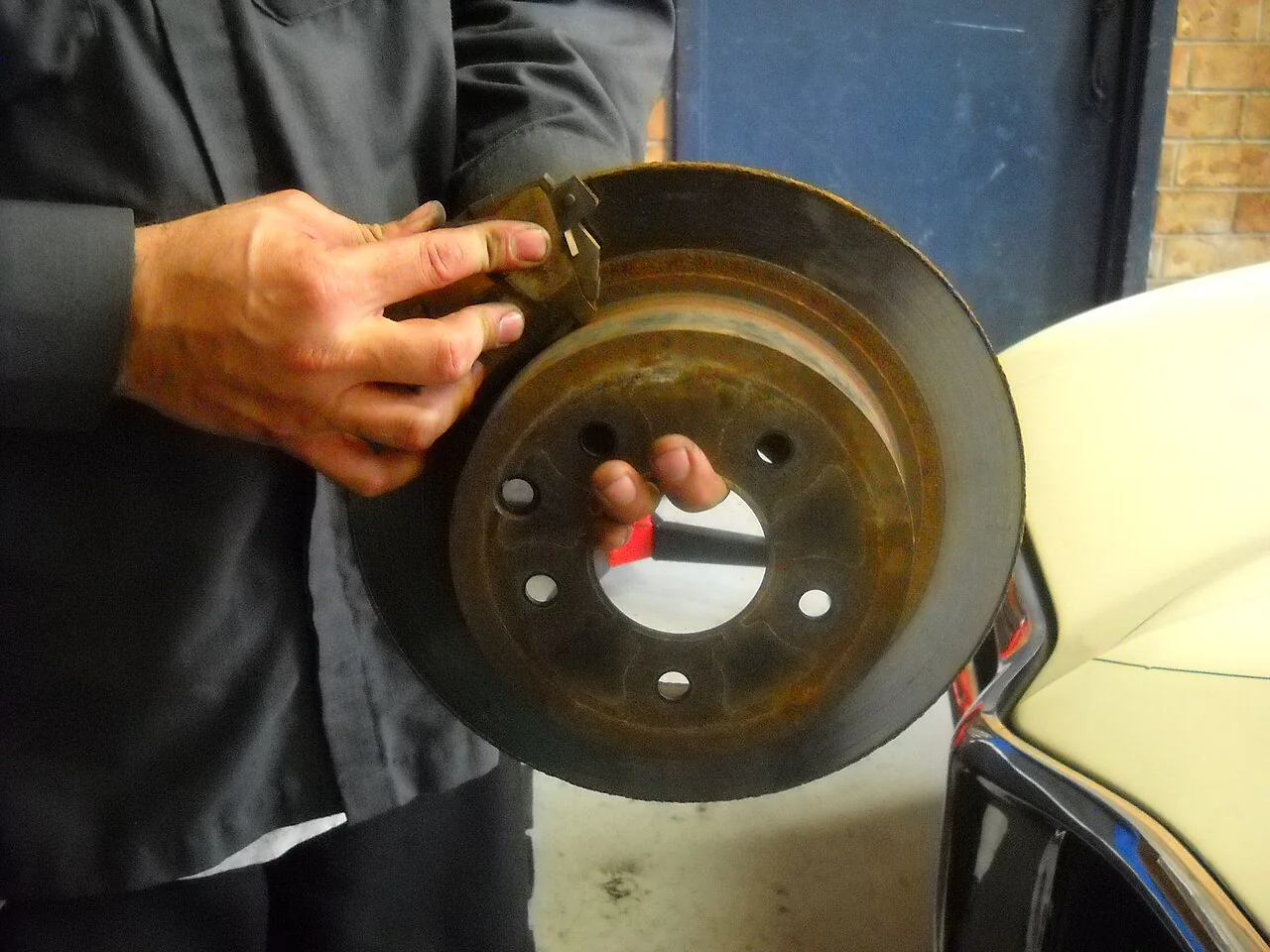
There is no best brake pad formulation. There is a formulation that suits a hot-climate taxi doing 400 km a day, and a different one that suits a private car that mostly sits parked — and supplying either to the other market generates complaints.
The three families
Semi-metallic. Typically 30–65% metal — steel wool, iron powder, copper — bound in resin.
- Strong at high temperature; resists fade well.
- Conducts heat away from the pad face, which helps under sustained braking.
- Noisier, and produces dark dust that shows on wheels.
- Harder on discs than the alternatives.
- Cold bite is weaker — the first stop on a cold morning feels less positive.
NAO (non-asbestos organic). Glass, rubber, carbon and aramid fibres in resin, with little or no metal.
- Quiet, gentle on discs, good cold bite.
- Softer, so they wear faster and produce more dust — lighter in colour but greater in volume.
- Fade earlier under sustained heat.
Ceramic. Ceramic fibres and filler with a small amount of non-ferrous metal.
- Quiet, light-coloured dust that is less visible on wheels.
- Stable friction across a wide temperature band.
- Long life and low disc wear.
- More expensive.
- Cold bite can be weaker than NAO, and heat transfer into the disc is higher because ceramic conducts less — worth knowing for heavy applications.
The friction code on the edge
Pads carry a two-letter code stamped on the edge. The first letter is the friction coefficient measured at normal temperature, the second at elevated temperature. The letters map to ranges:
| Code letter | Friction coefficient |
|---|---|
| E | 0.25–0.35 |
| F | 0.35–0.45 |
| G | 0.45–0.55 |
| H | over 0.55 |
Two things this code tells you at a glance:
Whether friction holds up when hot. A pad coded FF holds the same band hot and cold. A pad coded GE loses friction significantly when hot — that is fade, described on the pad itself.
Whether a substitution changes braking balance. Fitting a much higher-coefficient pad to one axle changes front-to-rear balance, which affects stability under heavy braking. Matching the original code is the safe default when substituting.
The code is a useful screening tool for incoming batches: a pad whose stamped code does not match the approved sample is a different formulation regardless of what the box says.
Matching formulation to market
This is where the commercial judgement sits.
- Hot climate, hilly terrain, commercial use — semi-metallic or a heavy-duty ceramic. Fade resistance dominates; noise and dust are secondary. Taxi and minibus fleets fall here.
- Urban private cars, temperate climate — ceramic or NAO. Noise and dust are what the customer actually notices day to day.
- Dusty, unpaved roads — a harder formulation. Soft pads embed abrasive grit and then act as a grinding paste on the disc.
- Cold climate with short trips — cold bite matters most; NAO or ceramic with good low-temperature friction.
- Heavy vehicles or heavy loads — semi-metallic, for heat capacity and heat transfer.
Bedding in
New pads need a bedding procedure: a series of moderate stops from moderate speed, allowing cooling between them, to transfer an even layer of friction material onto the disc.
Skipping it produces two of the most common warranty complaints in this category. Uneven transfer causes judder that feels identical to a warped disc — and is routinely misdiagnosed as one, leading to a disc being replaced when the pads were the issue. And a hard stop on unbedded pads can deposit a patch of material that becomes a permanent high spot.
Supplying a bedding instruction card in the box costs almost nothing and removes a measurable share of claims. For markets where the pads are fitted by informal workshops, a pictorial card works better than text.
What to check on an incoming batch
- Friction code stamped on the edge, against the approved sample.
- Backing plate thickness and flatness. A bowed plate does not sit square in the caliper and wears the pad unevenly.
- Bond integrity. Friction material separating from the backing plate is the most dangerous defect in this category. Shear testing is the proper check; at minimum, inspect the bond line for gaps.
- Chamfers and slots present as specified — these control noise, and their absence produces squeal complaints.
- Shim and hardware included and correct. Missing shims are a frequent cause of noise complaints that get blamed on the friction material.