
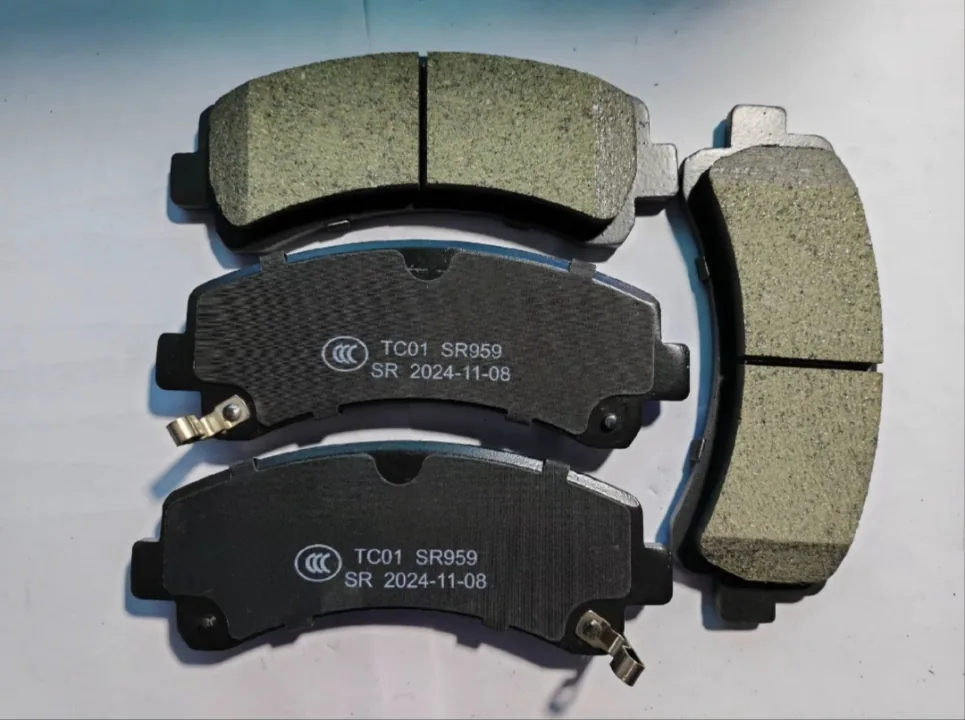
A friction product can be well made, correctly specified and completely unsellable in a market because it lacks a marking. Approval requirements for replacement brake parts vary by market and are enforced at the border, not at the workshop.
What is stamped on a pad and why
A properly marked friction product carries several pieces of information on the backing plate edge:
- The friction coefficient code — two letters describing friction at normal and elevated temperature. Covered in detail in our friction materials guide; the point here is that it should be present and should match the approved sample.
- A part or reference number identifying the specific product.
- A batch or date code supporting traceability. This is what makes a recall or a defect investigation possible, and its absence should be treated as a warning sign about the manufacturer's process control rather than a cosmetic issue.
- An approval mark where the destination market requires one.
- Manufacturer identification.
Why the approval question has to be asked per market
Replacement friction material is regulated differently across markets, and the differences are substantive:
Some markets require type approval of replacement friction parts against a defined test procedure, with an approval number that must appear on the product and on the packaging. Selling unapproved friction into those markets is a customs and liability problem regardless of the product's actual quality.
Other markets have no specific approval requirement for replacement friction, and general product safety rules apply instead.
Some markets operate a national certification scheme covering safety-critical automotive components, with its own mark and its own conformity process.
The practical rule: establish what the destination requires before quoting, get it in writing from the buyer, and confirm with the manufacturer that the product carries it. Assuming that a product approved for one market is acceptable in another is the most common and most expensive error in this category.
What to request from a manufacturer
- The approval certificate itself, not a statement that approval exists. Check that the product range on the certificate covers the specific part numbers you are buying — certificates are scoped, and a certificate covering a different range is not evidence for yours.
- Test reports behind the approval, where available.
- Confirmation of the marking that will appear on the product and on the box, with a photograph of a marked sample.
- The batch coding scheme and how to read it, so a returned product can be traced.
- A material declaration where the market restricts specific substances in friction materials. Some markets have moved to restrict certain metal content in friction products, and this is an active area of change worth confirming rather than assuming.
Packaging markings
Approval marks frequently have to appear on the packaging as well as the part, and packaging carries its own requirements: part number, quantity, manufacturer identification, and in some markets language requirements for any instructions.
Where you are private-labelling, this becomes your responsibility rather than the manufacturer's. The approval mark belongs to the approval holder and cannot simply be reproduced on your own box without the relationship behind it being correct. This is worth clarifying explicitly at the private-label agreement stage.
The unmarked product
Unmarked friction products exist and are widely traded. Some are perfectly serviceable; some are not. The commercial reality is that an unmarked product limits you to markets without marking requirements, prices at the bottom of the range, and leaves you with no traceability when something goes wrong.
For an importer building a brand rather than clearing containers, marked and certified product is the only sustainable basis, and the cost difference is smaller than the exposure.
Before the first order
- Destination market's requirement for replacement friction, confirmed with the buyer or the local authority.
- Certificate scope checked against your actual part numbers.
- Photograph of a marked production sample, retained with the approved sample.
- Batch code scheme documented.
- Packaging marking requirements confirmed for the destination.