
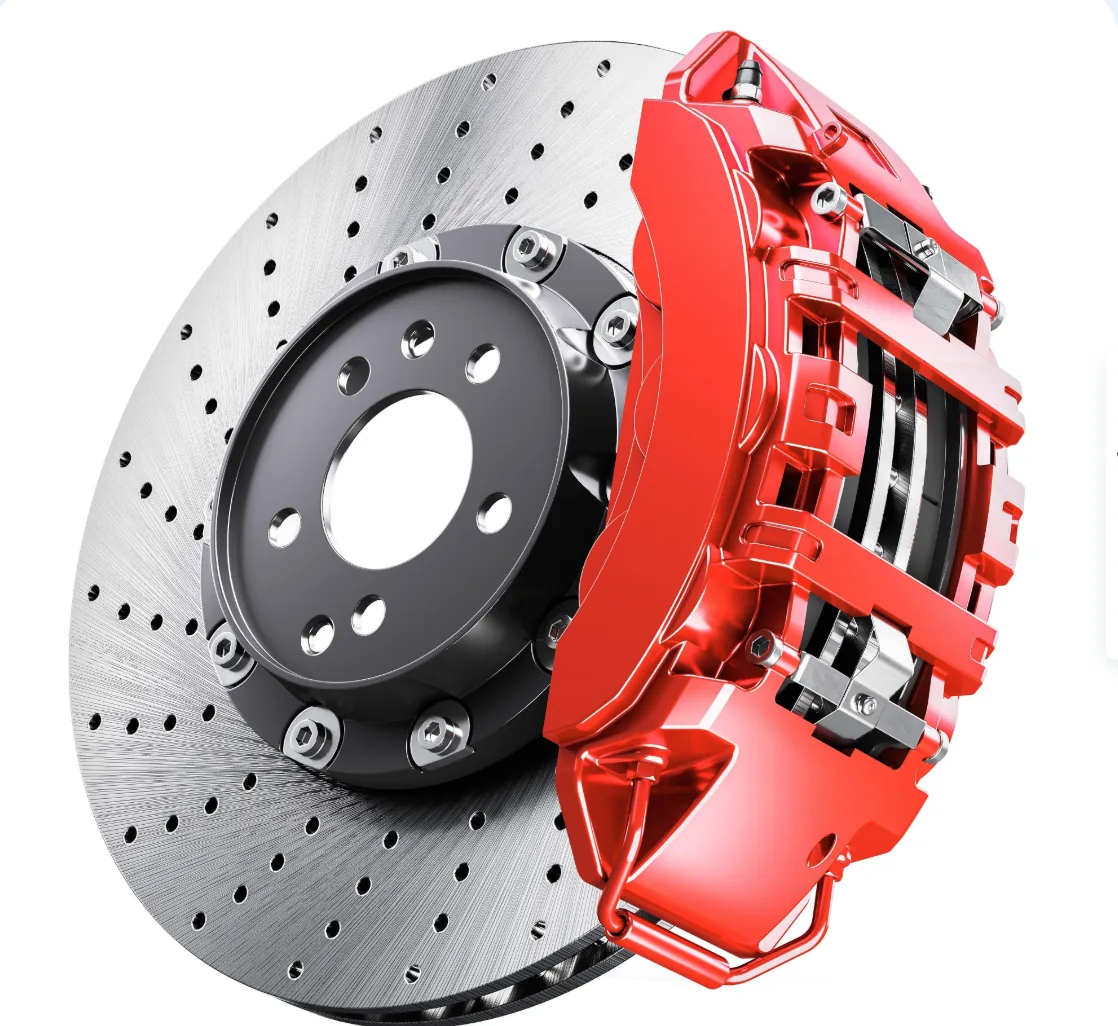
A caliper that has partly seized still stops the car. It just wears one pad three times faster than the other, cooks the disc on one side, and returns as a complaint about pad quality.
Floating and fixed
Floating (sliding) calipers have pistons on one side only. When the piston pushes the inner pad against the disc, reaction force slides the whole caliper body along guide pins, pulling the outer pad in. One or two pistons, compact, inexpensive, and the overwhelming majority of what the aftermarket sells.
The weakness is inherent: the outer pad is applied indirectly, through a sliding mechanism that must stay free. When it does not, everything downstream goes wrong.
Fixed calipers have opposed pistons on both sides and do not move. More even clamping, better heat handling, more rigid. More expensive, heavier, and usually found on higher-specification vehicles.
For an aftermarket importer the practical consequence is simple: fixed calipers are a low-volume, high-value line, and floating calipers are where the volume and the warranty exposure both sit.
The two seizure modes
Guide pin seizure. The pins corrode inside their bores or the rubber boots split and let water in. The caliper can no longer slide, so the inner pad does most of the braking. The signature is unmistakable: inner pad worn thin, outer pad nearly new.
Piston seizure. Corrosion behind the dust seal, or a swollen piston seal from contaminated fluid. The piston does not retract, so the pad drags continuously. The signature is a hot wheel after a short drive, a disc with heat discolouration, and both pads on that corner worn evenly but fast.
Both present to the customer as "your pads wore out too quickly", and both are worth diagnosing before replacing anything, because new pads on a seized caliper fail exactly the same way.
Judging a remanufactured caliper
Reman calipers are a legitimate and useful product line, and the quality range is enormous. What separates a genuine remanufacture from a repainted used part:
- The bore condition. A proper reman hones or replaces the bore. A repaint leaves the original corrosion pitting, and a pitted bore destroys a new seal within months.
- New seals and boots throughout — piston seal, dust boot, guide pin boots. Ask specifically whether guide pins and boots are included, because they are frequently omitted and they are what fails first.
- The piston. Steel pistons corrode; phenolic pistons do not but are more sensitive to overheating. Either is acceptable if correct for the application, but a corroded original piston reused is not.
- Bleed nipple free and undamaged. A seized bleed nipple makes the caliper unusable at fitting, and it is the single most common reason a reman caliper is rejected in the workshop.
- Coating. A properly prepared and coated body resists corrosion. Paint sprayed over rust flakes off in a season.
A practical incoming check: retract and extend the piston with compressed air on one unit from each batch, inspect the bore, and confirm the guide pins slide freely by hand. Fifteen minutes, and it catches most of what goes wrong.
Core returns
Reman supply usually runs on a core exchange — the old caliper is returned and credited. Two points worth settling before the first order:
What makes a core unacceptable. A cracked body or a stripped thread is scrap, not core. The rejection criteria should be written down, because disputes about core credit are common and entirely avoidable.
Who pays return freight, and on what timeline. Cores are heavy and the freight is real. On a long export lane the core return often costs more than the core credit, which is why many export programmes run outright rather than on exchange. That is a legitimate structure and should be priced accordingly rather than discovered later.
What to supply alongside
A caliper replacement almost always needs brake fluid and usually needs a guide pin kit and new pads. Selling the caliper alone produces a second order and a delayed repair. For distributors serving workshops, bundling the hardware is worth more than the small extra margin suggests.