
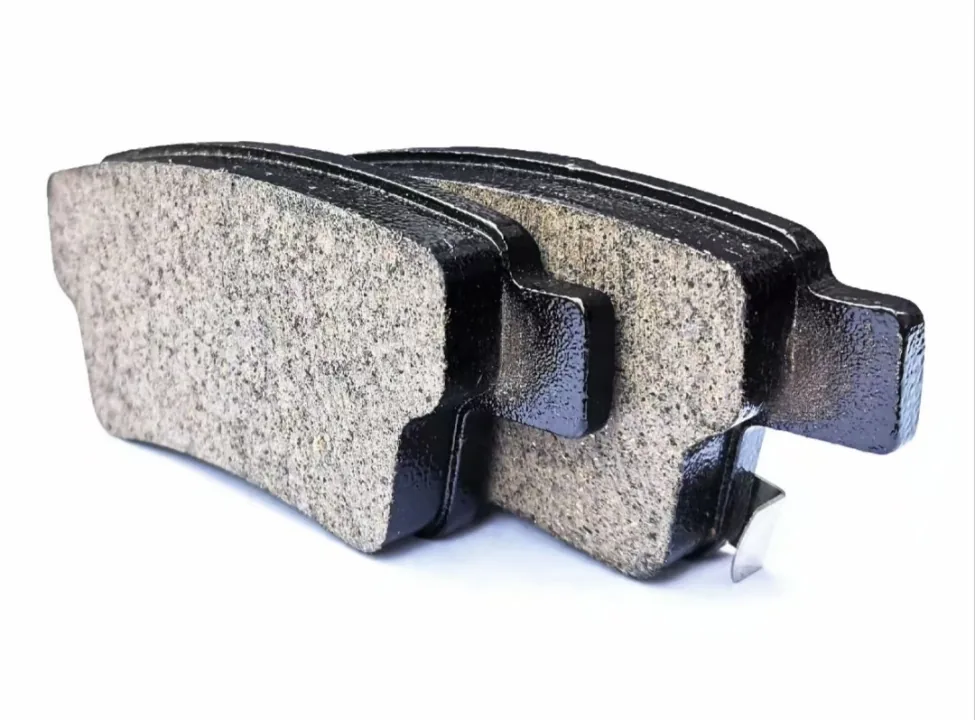
Brake squeal is a vibration problem. The pad and disc form a system with a resonant frequency, braking excites it, and if that frequency lands in the audible range everyone hears it. The friction material is only one of the variables.
Why the cheapest pad in a range is usually the noisiest
Not because its friction material is worse — often it is adequate. It is because noise control is the first thing removed to hit a price. The shim goes from multi-layer to single-layer or disappears entirely, the chamfers are omitted, the slot is not machined, and the backing plate is stamped to a looser flatness tolerance.
Every one of those is invisible in a photograph and each contributes to squeal. This is why comparing two pads on friction code alone misses most of what determines whether the customer complains.
What the shim does
A shim sits between the backing plate and the caliper piston or finger. It does two things: it damps vibration by converting it into heat within a viscoelastic layer, and it decouples the pad from the caliper so vibration transmits less readily.
Construction varies enormously:
- Single-layer steel — cheapest, provides a sliding surface but little damping.
- Rubber-coated steel — one damping layer, adequate for many applications.
- Multi-layer (steel–rubber–steel, sometimes more) — genuine damping across a broad frequency range. This is what a quality pad carries.
Shims also degrade. The rubber layer hardens with heat cycling, and a pad that was quiet for two years can start squealing without anything else changing. That is normal ageing, not a defect, and it is worth being able to explain.
Chamfers and slots
Chamfers — the angled edges at the leading and trailing ends of the friction block. They reduce the sharp pressure spike as the pad edge engages, which is a primary squeal trigger. Cheap pads are often supplied square-edged.
The centre slot — a groove across the friction face. It splits the friction block into two smaller areas with different resonant characteristics, which disrupts the coherent vibration that produces a tone. It also gives debris somewhere to go.
Neither costs much to produce. Both are omitted routinely at the bottom of the market.
The backing plate
Two properties matter:
Flatness. A bowed plate does not seat squarely against the piston, so pressure distributes unevenly across the friction face. Uneven pressure causes uneven wear and taper, and tapered pads squeal.
Thickness and stiffness. A thin plate flexes under clamping load, which changes the pressure distribution dynamically — exactly the condition that sustains vibration.
Both are checkable on incoming goods with a straightedge and a caliper against the approved reference sample.
The bond line, which is a safety item rather than a noise item
Friction material separating from the backing plate is the most dangerous defect in this product category. It is worth inspecting for on every batch: look along the bond line for any gap or inconsistency, and on a sample, attempt to shear the material off. Proper testing is a shear test to a stated force; at minimum, a visual inspection catches gross defects.
Noise complaints that are not the pad
Before accepting a claim, three checks usually resolve it:
- Was the hardware replaced? Worn anti-rattle clips and dry slide surfaces cause noise regardless of pad quality.
- Was the pad bedded in? Uneven material transfer produces both judder and noise, and it is a fitting procedure issue.
- Is the disc within specification? Excess thickness variation causes vibration that no pad will silence.
Supplying a fitting instruction card that covers hardware replacement, slide lubrication and bedding removes a measurable proportion of noise claims, and costs almost nothing.
What to specify when noise matters
For markets where customers are noise-sensitive — urban passenger cars, premium segments — specify multi-layer shims, chamfered and slotted friction blocks, and hardware included in the box. It raises the unit cost modestly and moves the product out of the complaint-generating tier entirely.