
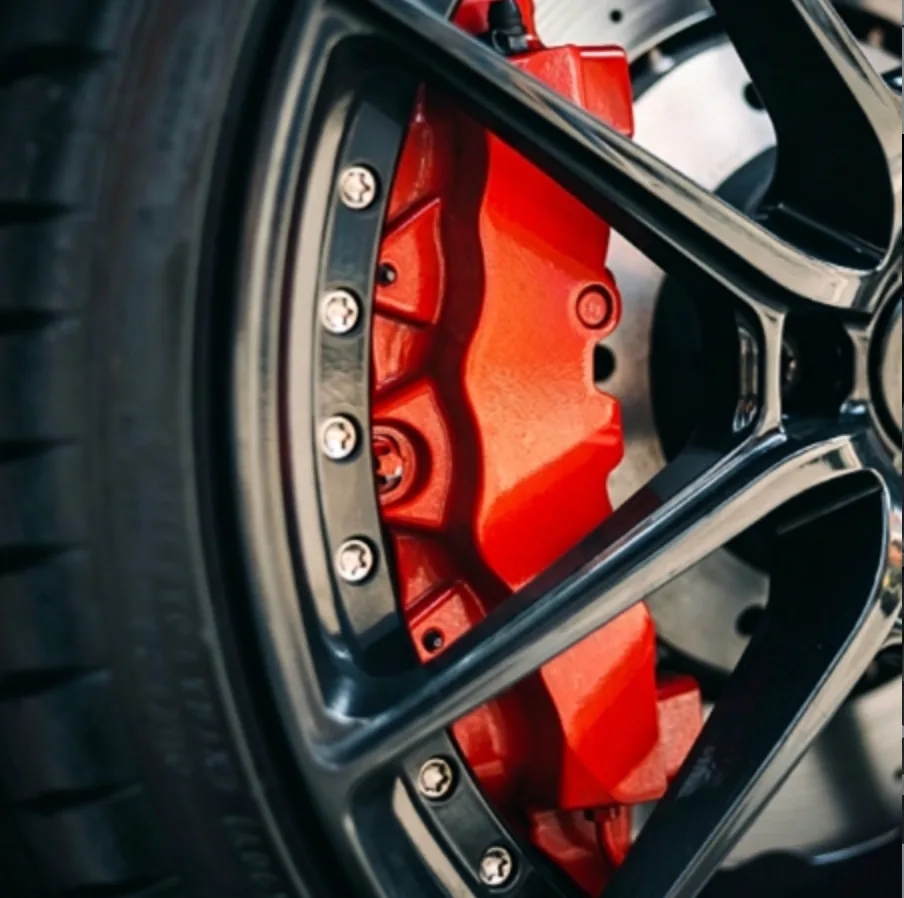
Brake-fluid grade, vehicle approval and hydraulic-part fitment need separate checks. For an importer, a higher DOT number is not enough to approve a substitution. Start with the vehicle manufacturer's fluid specification, then confirm the exact component and the evidence required for your destination market.
What do dry and wet boiling points mean?
FMVSS No. 116 specifies minimum equilibrium reflux boiling points. The wet test uses controlled humidification; it does not predict the age or remaining service life of fluid in a particular vehicle. Both results describe laboratory performance, rather than a guaranteed temperature limit for every braking system.
| Fluid designation | Minimum dry ERBP | Minimum wet ERBP |
|---|---|---|
| DOT 3 | 205 °C | 140 °C |
| DOT 4 | 230 °C | 155 °C |
| DOT 5 silicone-base / DOT 5.1 non-silicone-base | 260 °C | 180 °C |
These are standard minima, not typical values for an individual product. Request the named product's technical data and test evidence. The standard also includes properties beyond boiling point, such as viscosity, corrosion and effects on rubber components. See the current FMVSS No. 116, sections S5.1.1, S5.1.2 and S6.2.
Can DOT 5 or DOT 5.1 replace DOT 4?
Do not treat the number sequence as a universal upgrade chart. DOT 5 silicone-base and DOT 5.1 non-silicone-base are distinct designations. NHTSA's May 1994 interpretation on DOT 5 says to prevent mixing DOT 5 with another brake-fluid type. That interpretation is not an approval to convert a specific vehicle.
For any proposed substitution, obtain the vehicle manufacturer's recommendation and the fluid supplier's application guidance. A boiling-point claim alone does not establish suitability for a particular ABS/ESC system, seal material or low-temperature requirement. Do not approve a top-up or conversion from this guide.
What should a distributor request before ordering?
- Vehicle and application: make, model, year, destination market, OE reference and the manufacturer's required fluid specification.
- Product evidence: exact fluid designation, technical data sheet, safety data sheet and the test or conformity information applicable to the destination. Ask which product and batch each document covers.
- Traceability: manufacturer or packager identity, lot code, manufacture or packaging date, container size and label photographs.
- Handling terms: supplier-stated shelf life, storage conditions, unopened-container requirements and guidance after opening. Do not invent one shelf life or replacement interval for all products.
- Commercial scope: quantities, packaging language, shipment destination and whether fluid and hard parts are supplied separately. Confirm availability and documentation before accepting a quotation.
Keep fluid in its original, clean, tightly closed container and follow the vehicle manufacturer's recommendations. A published boiling-point table does not replace the product label or vehicle service instructions.
How should hydraulic parts be matched?
Use the OE reference and vehicle details to identify the candidate part, then compare the actual drawing and sample. For hoses, request mounting-end details, routing and length information. For cylinders and calipers, compare the relevant mounting dimensions and connections. A familiar photograph or a matching description is not sufficient fitment evidence.
Our OE-number matching and fitment service is a starting point for a parts enquiry. The current parts catalogue shows listed product lines; this article does not confirm stock of brake fluid, hoses or cylinders. Ask about the exact item and available evidence.
What if a customer reports a soft brake pedal?
A soft or sinking pedal requires a qualified workshop to inspect the vehicle using the manufacturer's procedure. A symptom alone cannot identify the failed component or establish whether a part is defective. Do not continue driving with impaired braking.
For a distributor's claim record, collect the vehicle identification, part reference, batch code, installation date, fluid used and the workshop's inspection findings. Keep photographs and relevant service records. Avoid prescribing a repair or promising that a short checklist can rule out every braking fault.
Build a clearer parts enquiry
Send the OE references, vehicle details, quantities and destination first. Add drawings or measurements where fitment is uncertain, and list any documentation needed before approval. For a brake-service assortment, the listed disc brake pads and replacement brake discs can be discussed separately from hydraulic components and fluid.
Contact CZJ Auto Parts with your parts list to discuss matching, sourcing scope and quotation requirements. Product suitability, availability and delivery terms require confirmation for the specific enquiry.
Technical references checked on 12 October 2026. Standard figures describe the cited US fluid tests; destination requirements and vehicle approvals must be checked for the actual application.